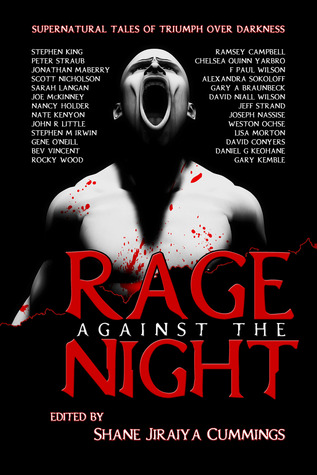
So this week I’m reading Rage Against the Night, a short story anthology that was put out by the HWA with the charitable goal of helping one of its members, Rocky Wood (who happened to be president of HWA at the time), purchase an eye gaze machine* as he battled ALS.
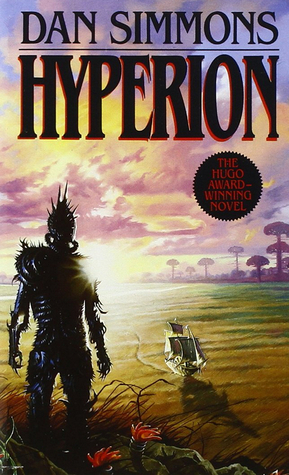
This week I’m reading Hyperion, the Hugo award-winning novel by Dan Simmons, in which … uh … well I’m not really sure I can explain what’s going on, because it seems really complicated. Suffice to say there’s a planet named Hyperion that seems to be about to become ground zero in an interplanetary war between a couple of different human factions (one planetary, one space-based), and which is also haunted by a possibly shapeshifting, definitely fearsome creature, called the Shrike, which essentially teleports around impaling people and hanging them as ornaments from its gigantic backwards-in-time-traveling aluminum Christmas tree, and which is worshiped as a god throughout inhabited space, and which our small band of protagonists is currently traveling upriver, Heart of Darkness-style, to visit. Oh and also there’s a huge planetary labyrinth (one of at least nine such labyrinths on different planets) full of cruciform parasites whose significance I don’t yet know.
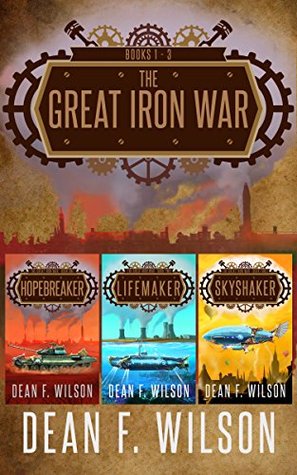
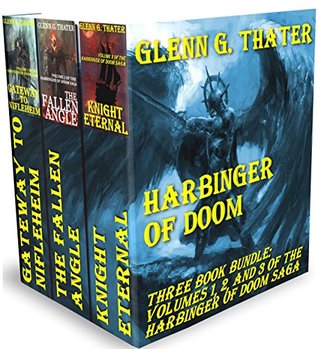
This week I’m reading volumes 1-3 of The Great Iron War, by Dean F. Wilson, a science fantasy steampunk series in which Earth (or someplace like it) is invaded by outsiders, called “demons” (even though I’m pretty sure that’s not what they are) who come in search of iron. Hence the name of the war.
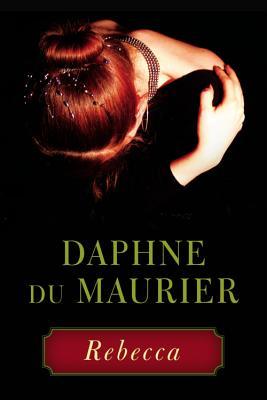
This week I’m reading Rebecca, the classic novel by Daphne du Maurier, in which a very young (and apparently nameless) narrator is swept off her feet by the dashing Maxim de Winter, quickly marries him, and goes off to live with him in his vast estate, Manderley, where it seems that―much like in the American South―the past is never really dead, and isn’t even past.
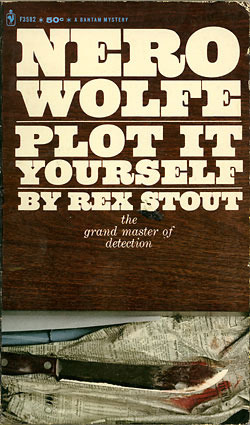
These days, I do nearly all my reading on an e-reader, currently an InkBook Obsidian, but I do on occasion return to the dead tree books of yore. Typically this will be because someone gave or loaned me said dead tree edition. Such was the case with Dune, which, being a door-stopper of a book, I eventually bought in e-form so I wouldn’t have to fight with it when reading at lunch; and such is the case with the Nero Wolfe books, which my father sent to me in a box a while back. I’ve read them all before, but now I’m reading them again, because who doesn’t like to spend some time visiting old friends? The one I’m currently into is Plot it Yourself, in which Wolfe goes up against a con artist with a fondness for pretending that popular novels are plagiarisms of his or her own work, and also for knives.
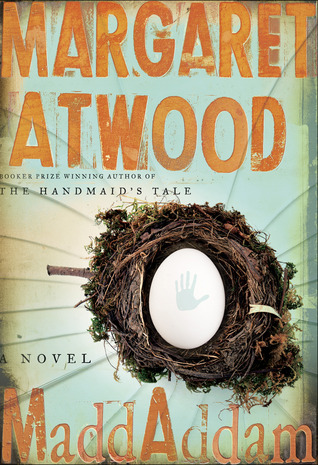
This week I’m (still) reading MaddAddam, the final installment in Margaret Atwood’s dystopian/post-apocalyptic series that began with Oryx & Crake. Dystopian fiction and post-apocalyptic fiction are not the same thing, of course, but all three books in the MaddAddam trilogy qualify as both because their present-day scenes take place after the destruction of (most of) humanity, while their flashback scenes take place in the dystopian burbclaves that preceded the apocalypse. Hence you get to eat your dystopia and have it too. Or something like that.
This week I’m reading MaddAddam, the third part of Margaret Atwood‘s post-dystopian/post-apocalyptic trilogy that began with Oryx & Crake and continued with The Year of the Flood — although because Oryx & Crake and The Year of the Flood ran more or less concurrently, perhaps “continued” isn’t quite the right word. Let’s say “was expanded” instead.
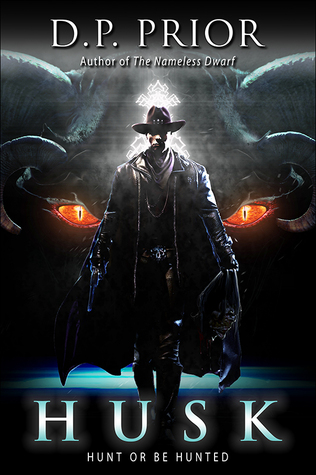
This week I’m reading Husk, by D.P. Prior, in which a bounty hunter “Maresman” arrives in the Old West alien town of Portis on the trail of an outlaw “husk”, or demon, who is apparently responsible for the deaths of at least five people. Hilarity does not ensue.

 Viscosity